
The Soup
He sank to his knees on the sandy ground, the earth beneath him stained red by the spilling of so much blood. His final breath was not one of glory, conquest, or fulfilment, despite the victory. It was one of emptiness and sorrow. The last man standing from the victorious army now knelt alone, succumbing to a fate he could no longer escape. The greatest of wars had brought the world to the brink of extinction, wiping out most of its creatures and leaving behind little more than ruin, silence, and the memory of what had once been.
Then the rains began. They fell without pause for many, many days, long enough for those who remained to search for an explanation.
Some said the gods had watched the world destroy itself and, at last, begun to weep. Others believed the storms were nothing more than another consequence of a world thrown violently out of balance. No one knew. The rain simply kept falling.
Yet even while the land remained scarred by war, small leaves began to emerge from the soil. They pushed through the blood-soaked earth as though the world itself refused to surrender. Despite everything that had happened, nature had not forgotten how to regenerate.
The relentless rains flooded the land before draining into rivers, oceans, and deep into the subsoil. For weeks, then months, the world remained soaked beneath those strange rains. When the waters finally began to settle, it became increasingly difficult to see the history of violence that had so recently covered the ground. New lakes had appeared where none had existed before. Rivers had changed course. Grass began to grow again.
There was a new calmness in the air, and nature, indifferent to the ambitions that had nearly destroyed it, attempted to resume its course.
The few Hominids who had survived slowly began to feel something they had almost forgotten: hope. They returned to the remains of their settlements and started rebuilding the marks of civilization that their own rivalries and disputes had torn down. Walls were raised again, wells were cleared, roofs repaired, and abandoned fields planted once more. Among those survivors was an old woman who lived with her three grandchildren. The children had lost both of their parents and their grandfather during the wars, leaving the grandmother as the only family they had left.
Their survival depended almost entirely on her, and every day was spent stretching what little food remained, repairing what could still be repaired, and trying to keep the four of them alive long enough to see another morning.
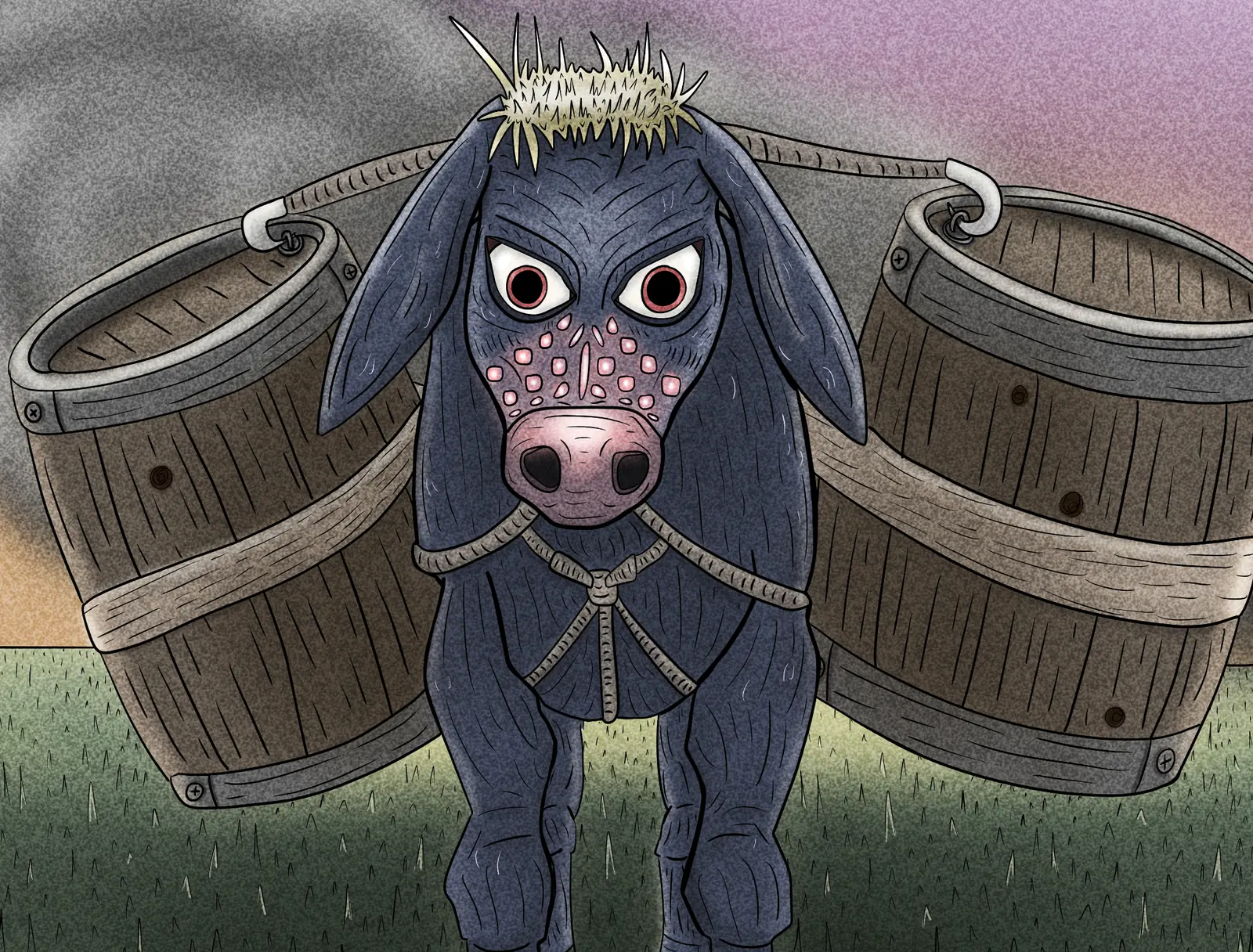
One day, their well ran dry. The old woman lowered the bucket again and again, but each time it returned with nothing but dust and damp earth. Without water, the children would not last long. She took an empty barrel and began walking, following the low ground in the hope that somewhere the rains had left something behind.
She walked for miles beneath the pale sky, stopping only when exhaustion forced her to. Eventually, she came across a small lake nestled between two stretches of ruined land. She knew the area well enough to know that the lake had never been there before.
Before the great rains, there had been nothing there but dry soil and scattered stones. She hesitated at the edge of the water, but only for a moment. Whatever its origin, it was water, and her grandchildren were thirsty. She filled the barrel and carried it home.
The four of them drank cautiously at first. The water tasted clean, almost unusually clean, and after only a few small sips they began to notice something strange. Their tiredness seemed to lift. Their bodies felt lighter, stronger. The dull heaviness they had carried since the war loosened in a way that felt impossible to explain. There was more than relief from thirst in the water. There was a greater sense of existence in it, as though every breath had become sharper and every sound clearer. Their thoughts came more quickly.
Their limbs felt more responsive.
Even the grandmother, whose body had been worn down by years of hunger and grief, felt young again for a few precious minutes. Then, just as suddenly as it had come, the feeling faded.
That evening, the grandmother prepared dinner. She took the carcass of an old Avian she had raised in their garden, a bird that had stopped laying eggs and, in a household where every mouthful mattered, had stopped being useful.
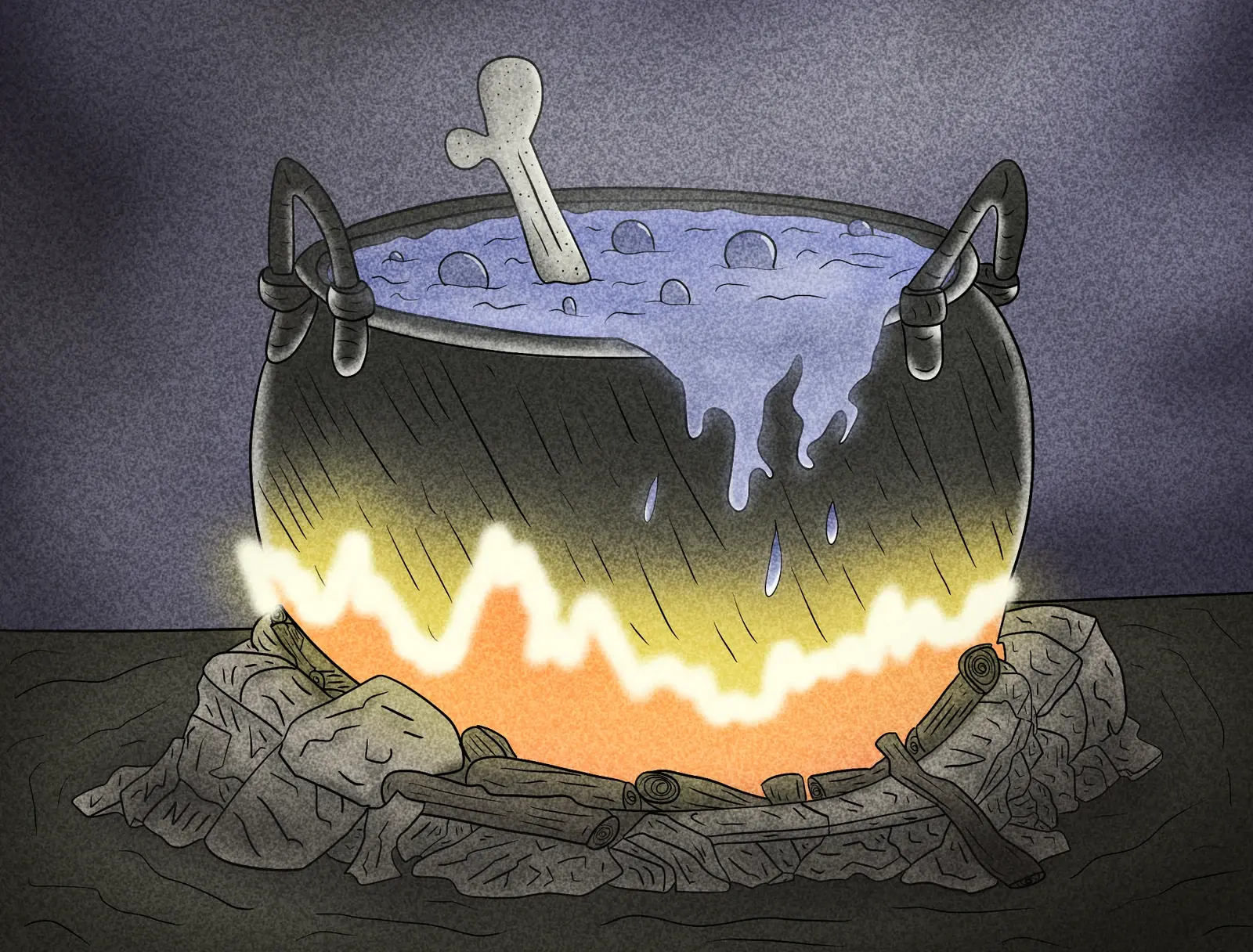
She placed it in a large cauldron with some of the lake water, then added a handful of herbs and whatever ingredients she could find to give the soup some flavour. As the pot began to boil, the pieces of meat softened and slowly broke apart.
The bones occasionally rose to the surface with the movement of the water, and after some time the grandmother noticed something she could not explain. Each time one of the bones resurfaced, it seemed smaller.
At first she thought the heat was playing tricks on her. She leaned closer and watched carefully.
A long bone appeared near the surface, sank again, then rose a few minutes later noticeably thinner than before. Another followed. Then another. The meat had already dissolved into the broth, but now the bones themselves seemed to be disappearing. She stopped stirring. Something was wrong. Before long, there was almost nothing left inside the cauldron. The meat was gone. The bones were gone. The herbs had vanished. Even the thicker pieces of vegetable she had added could no longer be found.
What remained was a thin, bluish liquid, strange in colour and almost perfectly smooth.
It had none of the richness of a proper soup. Its consistency was more like water. But the family was hungry, so they drank it.
The children drank from their bowls quickly and went to bed. The grandmother remained in the kitchen, cleaning what little there was to clean before finally allowing herself a moment of rest. She sat at the table and lowered her aching arms onto the wooden surface. She had barely stopped moving all day. For a few seconds she simply breathed. Then the nausea came. Her hands began to shake.
A strange weakness passed through her body, followed by an uncomfortable alertness that made every sound in the house seem unnaturally loud. She closed her eyes and rested her head on the table.
And she saw a man.
He was riding toward her on a black horse, dressed in an overall, the animal galloping hard beneath him. The image was impossibly vivid. She knew her eyes were closed. She knew she was sitting in her kitchen. Yet the man seemed to be only a few metres away, coming closer with every beat of the horse's hooves.
He raised a sword above his head. His expression was fierce, but there was something hollow about it, something empty behind his eyes. It was not anger she saw there. It was destruction without passion, violence stripped of purpose. For a moment, she thought she was becoming delirious. Perhaps the water had poisoned her. Perhaps the soup had. Perhaps exhaustion had finally broken her mind. She told herself it could not be real. It was exhaustion, or sickness, or something in the water. It had to be.
Her eyes opened and she ran to the children's room.
The window was open. The beds were empty. For a second, her heart stopped.
Then she saw the man. He stood with his back to her beside the children's beds, lifting the blankets and searching beneath them. He turned slowly when he heard her enter. The same face she had seen with her eyes closed now stared directly at her. The same empty expression. The same sword. He began walking toward her. She did not scream. She did not run. There was nowhere to go.
The man raised the sword, and the grandmother closed her eyes, accepting the fate that had somehow already been shown to her. But the blade never touched her.
There was a sudden wet sound, followed by a sharp metallic scrape. She opened her eyes. A huge iron spike protruded from the man's chest.
For a moment he remained standing, his sword still raised, as though his body had not yet understood what had happened. Then his arm weakened and the weapon slipped from his hand. Behind him stood the grandmother's oldest grandson, both hands gripping the other end of the spike. The man dropped to his knees. The boy released the iron bar. The body collapsed onto the floor.
The other two children emerged from their hiding places.
No one moved. The grandmother stared at the children, and they stared back at her. For several long seconds, there was complete silence. None of them needed to explain what had happened. The children had known the man was coming. The grandmother had known too. They had all seen him before he arrived. The only difference was that the children had acted on what they saw faster than she had.
Once they were certain the man was dead, the grandmother decided they could not leave his body inside the house. They wrapped him in an old blanket and, with considerable effort, dragged him beyond the last ruined homes of the settlement. A few minutes away, they pushed the body deep beneath a thick patch of bushes at the foot of a hill and covered it with branches and loose vegetation. None of them wanted to explain how a dead stranger had ended up in their home.
When they returned, the youngest granddaughter looked toward the kitchen and then up at her grandmother.
“Grandma,” she said quietly. “Can I have some more soup?”